
Evenings in Colombo arrive with a familiar tropical heaviness—the air warm, the light softening just enough to slow the day down.
Shortly after six, the door of 88 Chinese Seafood Restaurant opens. Lao Li, a longtime regular, walks straight to his usual table near the back. He doesn’t reach for a menu.
“Crispy chicken,” he says, “and the soup of the day.”
Behind the counter, owner Guo Jianyuan nods and passes the order to the kitchen. It’s a small ritual, one that has repeated itself for decades. In a city shaped by change, this rhythm has remained steady.
Guo is a Malaysian Chinese who has lived in Sri Lanka for 34 years. He arrived in Colombo in 1992, following fellow migrants from Johor to work in a Chinese restaurant. What was meant to be a temporary job became a lifelong journey—one shaped by food, migration, uncertainty, and community.
“I thought I would stay two years, save some money, and go home,” he says. “I didn’t realize I was settling into a life.”
His personal story, the evolution of 88 Chinese Seafood Restaurant, and the shifting presence of Chinese communities in Sri Lanka have quietly mirrored one another—each shaped by global trade, local conflict, and the everyday need for belonging.
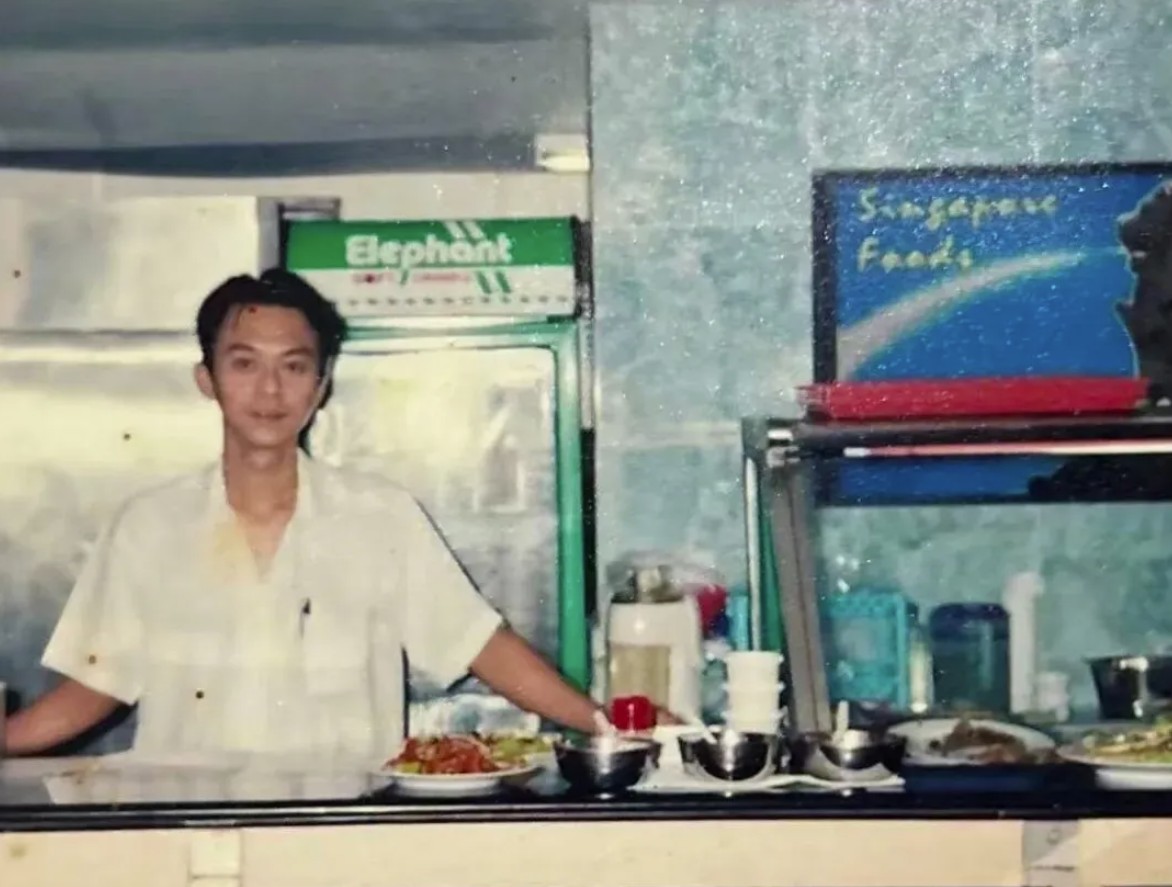
(Image: A picture of Guo Jianyuan in Sri Lanka 20 years ago. 88 Chinese Seafood Restaurant, Sheraton, and Tao Yuan Xuan, representing Chinese cuisine, are participating in the 2025 “Chinese Food Festival” hosted by the China Cultural Centre in Sri Lanka)
The 1990s: When Trade Brought People Together
When Guo first arrived, Sri Lanka’s Chinese population numbered only a few thousand. At the time, Colombo had become an unexpected hub for garment manufacturing, attracting international investors—particularly from Hong Kong—who were drawn by favorable trade conditions.
By early evening, the dining room where Guo worked filled with factory managers and quality inspectors. Conversations in Cantonese floated through the air, mingling with the scent of seafood and simmering broths.
For Guo, it was his introduction to Sri Lanka—not through landmarks or politics, but through people sharing meals far from home.
The work was grueling. The kitchen was stifling, communication with local colleagues relied on gestures, and exhaustion was constant. After two months, he nearly left.
“I told my boss I wanted to quit,” he recalls. “He asked me to stay until he found someone else. I stayed longer than I planned.”
He returned briefly to Malaysia, uncertain about his future. Then came a phone call: the replacement had left unexpectedly. Guo returned to Colombo, thinking it would be temporary.
In 1994, Guo and his brother opened 88 Chinese Seafood Restaurant. On its first night, the dining room was full. Familiar flavors—crispy chicken, fresh seafood, sizzling tofu—offered comfort to people navigating life abroad.
For many, the restaurant became more than a place to eat. It was where workweeks ended, where news from home was exchanged, and where cultural ties were quietly maintained.
(Image: The warm and cozy long-established 88 Chinese Seafood Restaurant)
Holding Steady Through Uncertainty
By the late 1990s, global trade patterns shifted. Many early investors moved on, and business slowed. Guo considered closing the restaurant.
Then came years of instability. Sri Lanka’s civil conflict brought frequent power cuts and a sense of unpredictability. Running a small business required constant adaptation—backup generators, shortened hours, and difficult decisions.
Yet new customers began to arrive: engineers, traders, and professionals connected to infrastructure and commercial projects between Sri Lanka and China. Languages in the dining room shifted from Cantonese to Mandarin. So did the menu—spicier dishes, heartier flavors.
Located in Colombo’s District 5, 88 Chinese Seafood Restaurant gradually became a neutral, grounding space—a place where people from different backgrounds could pause, eat, and feel momentarily safe.
“There were nights when people called just to ask if we were okay,” Guo says. “They would say they’d come back once things felt calmer.”
During periods of tension, the restaurant functioned as what sociologists call a third place—not home, not work, but a shared social space where community quietly forms.
(Image: The warm and cozy long-established 88 Chinese Seafood Restaurant)
A Global Pause and a Local Test
Nothing, however, prepared Guo for the pandemic.
From 2020 onward, curfews and travel restrictions emptied Colombo’s streets. Dining rooms closed. Business nearly vanished overnight.
Guo delivered food himself. He carried meals across the city, sometimes traveling hours for a single order. Once, he brought porridge to a young woman hospitalized with dengue.
“I didn’t tell my staff,” he says. “I didn’t want them to worry.”
Customers began leaving Sri Lanka as projects paused and borders closed. Guo adapted again—preparing food that could be frozen, helping regulars buy groceries when they couldn’t leave home.
What mattered most were small messages after delivery:
It tastes the same as before.
A Global Pause and a Local Test
Nothing, however, prepared Guo for the pandemic.
From 2020 onward, curfews and travel restrictions emptied Colombo’s streets. Dining rooms closed. Business nearly vanished overnight.
Guo delivered food himself. He carried meals across the city, sometimes traveling hours for a single order. Once, he brought porridge to a young woman hospitalized with dengue.
“I didn’t tell my staff,” he says. “I didn’t want them to worry.”
Customers began leaving Sri Lanka as projects paused and borders closed. Guo adapted again—preparing food that could be frozen, helping regulars buy groceries when they couldn’t leave home.
What mattered most were small messages after delivery:
It tastes the same as before.