
Interview with Pradeep Saputhanthri, Secretary to the Prime Minister of Sri Lanka
On a warm February evening by the Indian Ocean, the waterfront skyline of Port City Colombo glowed with lantern light, music, and the sound of families wandering between food stalls, opera stages, and craft demonstrations.
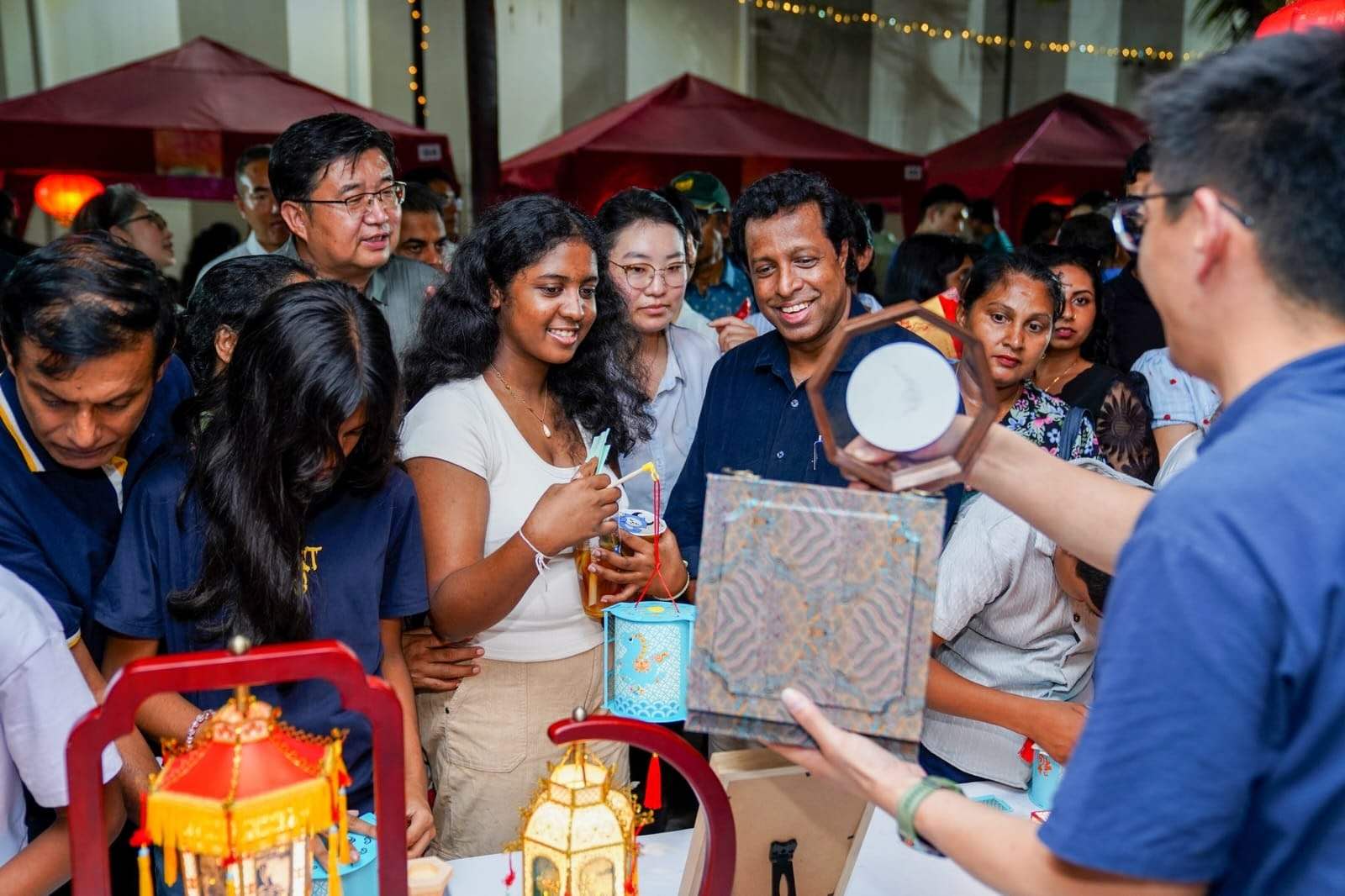
The 2026 Happy Chinese New Year Lantern Festival Fair, held on February 27, drew nearly 10,000 visitors over two days, turning the modern coastal district into a lively cultural promenade. Among the crowd was Pradeep Saputhanthri, Secretary to the Prime Minister of Sri Lanka, who attended the festival with his family — not only as a senior public official, but as a visitor enjoying the atmosphere like everyone else.
He shared his profound insights on the event, the time-honored bilateral friendship and the bright future of cultural and economic cooperation between the two countries in an exclusive interview with Ceylonese.
For Saputhanthri, the Lantern Festival Fair is more than a festive gathering – it is a transformative cultural experience that perfectly fuses tradition and modernity. “The overall design successfully turned a modern urban space into a vibrant cultural corridor,” he noted, adding that this blend of traditional elements and contemporary design left the deepest impression on him and his family. Amid the bustling atmosphere of the fair, the live demonstrations of Chinese intangible cultural heritage stood out as the most fascinating part for him. “Watching the creation of New Year prints and the delicate artistry of sugar paintings is truly captivating, and the traditional opera performances bridge the gap between ancient storytelling and a 21st-century audience,” he said. As a public official, Saputhanthri was particularly touched by the enduring vitality of traditional skills in the digital age, stressing that these tangible cultural expressions are the root of a nation’s cultural soul even as technological transformation advances.
The people-centric cultural celebration, as Saputhanthri put it, serves as a vital “soft power” bridge elevating China-Sri Lanka bilateral cooperation, a view echoed in Prime Minister Harini Amarasuriya’s congratulatory message for the event. He elaborated that such festivals boost bilateral ties in three crucial aspects. First, they foster cultural literacy at the grassroots level, building a people-to-people connectivity that formal documents can never replicate. “True cooperation is rooted in mutual understanding between our peoples, and a Sri Lankan family experiencing a Chinese tea ceremony or lantern display lays the foundation for long-term economic partnerships,” he explained. Second, the events act as a powerful tourism catalyst, showcasing Sri Lanka as a welcoming and culturally diverse destination to the world and attracting high-value travelers seeking authentic experiences. Third, they pave strategic pathways for innovation, demonstrating to global investors that Sri Lanka is a land where traditional heritage meets modern future by combining traditional skills with modern infrastructure at iconic venues like Port City Colombo. “Our governments collaborate on logistics, energy and trade, and our people are celebrating a shared vision of a culturally harmonious future — this emotional and cultural investment will elevate our bilateral cooperation to new heights,” he emphasized.
Saputhanthri’s bond with China traces back to his student days, long before the digital era made cross-cultural communication effortless. Radio Beijing’s Sri Lanka Service was his window to the Far East, a source of wonder that brought China’s traditional heritage, vast history and vivid daily life into his living room. “I was captivated by the announcers’ storytelling, which painted a vivid picture of China from the bustling streets of Beijing to the serene countryside landscapes,” he recalled with nostalgia. The interactivity of the radio made the experience even more special — he sent query letters to the programs and felt immense excitement receiving postcards and guide materials in return. “Those small tokens were not just paper, but a tangible connection to a friend across the sea,” he said. This early curiosity about China planted the seeds of cultural understanding, and it is this deep-rooted mutual appreciation that now guides his perspective on China-Sri Lanka bilateral cooperation. Those early radio broadcasts, he noted, paved the way for his professional and diplomatic respect for China today.
Having visited Beijing and Shanghai on official duties several times, Saputhanthri now harbors a new desire to explore the traditional and cultural heartlands of China, inspired by the Lantern Festival Fair in Colombo and his nostalgic memories of Chinese cultural stories from the radio. “This event sparked a different kind of curiosity in me — I want to experience the more traditional side of China that I once heard about on the airwaves,” he said, expressing his eagerness for a cultural journey beyond the major metropolises.
Port City Colombo, the venue of the Lantern Festival Fair, is a strategic project close to Saputhanthri’s heart, with recent legislative progress laying a solid foundation for its development. He described it as far more than a localized development, but one of Sri Lanka’s most ambitious and transformative strategic initiatives, with a vision to become a world-class, tech-integrated financial hub. “We envision Port City as a model for digital governance and sustainability, a smart city that attracts global talent, drives our digital economy and creates high-skilled opportunities for our youth,” he said, adding that the transparent and investor-friendly environment built by the recent legislation will make it a shining star in the region.
Looking ahead, Saputhanthri has grand aspirations for future China-Sri Lanka cross-cultural festivities, hoping to turn such standalone events into a sustained, nation-wide calendar of cultural exchange in Sri Lanka. “Colombo and Port City are magnificent stages, but I want these celebrations to reach our coastal towns, hill country and every corner of the nation, creating destination-based festivals that showcase Sri Lanka’s geographic and cultural diversity to international and local tourists,” he said. A firm believer in cultural reciprocity, he also hopes to bring the essence of Sri Lankan heritage — including Kandyan dance, intricate crafts and Aluth Avurudu traditions — to major Chinese cities like Beijing and Shanghai, such as holding a “Sri Lankan Cultural Week”. “This will build a ‘Sri Lankan Brand’ in the minds of the Chinese people and foster mutual empathy that transcends language barriers,” he explained. For Saputhanthri, these cross-cultural celebrations are the foundation of deeper socioeconomic linkages between China and Sri Lanka: “When we celebrate together, we build trust, and trust paves the way for greater cooperation in education, technology and trade.”
The 2026 Lantern Festival Fair, a joint effort of China Cultural Center and Sri Lanka counterparts under the guidance of the Chinese Embassy in Sri Lanka and co-hosted by multiple institutions, has turned cultural fusion into a tangible bond of friendship between the two nations. For Saputhanthri, this shared joy of cultural celebration is the very foundation of the millennia-old China-Sri Lanka ties – a foundation that will continue to support deeper and broader cooperation across all fields in the years ahead.