
A King Coconut Beverage Makes Its Debut at the China–South Asia Expo
At the South Asia Pavilion of the 10th China–South Asia Expo, a naturally pure beverage with a remarkably clean ingredient list quietly attracted attention from visitors and buyers alike.
Sri Lankan brand Bevgreen showcased its premium bottled drink made from the country’s unique King Coconut, leveraging its distinctive category positioning, health benefits and rich cultural heritage to win strong interest from both consumers and trade partners.
Leading the initiative is Ruwan Gamage, founder of Bevgreen and a veteran international marketer with more than two decades of cross-border business experience. Having identified China’s rapidly growing demand for healthy beverages, he has chosen the China–South Asia Expo as a strategic platform to introduce value-added King Coconut products to the Chinese market while exploring new opportunities to diversify Sri Lanka’s agricultural exports to China.
More Than a Coconut: A Symbol of Sri Lanka’s Heritage
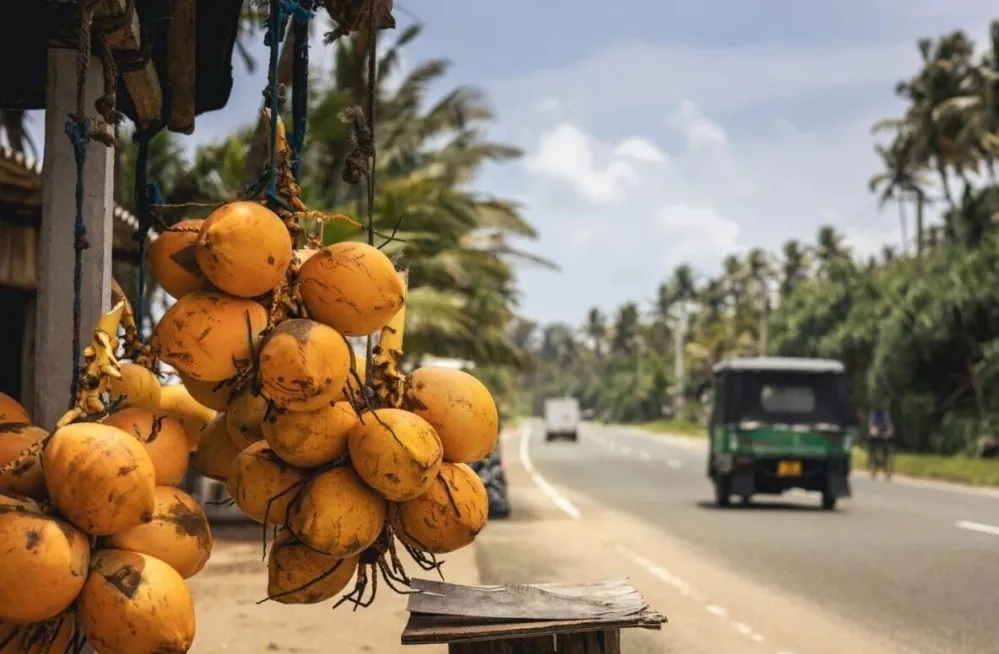
For many first-time visitors to Sri Lanka, one of the most memorable sights is a bright golden coconut sold on streets across the island—a natural source of hydration and electrolytes in the tropical climate.
Known locally as the King Coconut, the fruit is considered a signature species of Sri Lanka. Historical records and folklore suggest that its name derives not merely from its golden appearance but from its elevated status during the ancient Sinhala kingdoms, when it was regarded as more valuable than ordinary coconuts and was often reserved for royalty and senior Buddhist clergy.
Beyond its cultural significance, King Coconut has long held a place in Sri Lanka’s traditional Ayurvedic medical system. For centuries, local communities have valued its water for its perceived cooling and detoxifying properties. Rich in vitamins and trace minerals, it remains widely regarded as a natural wellness beverage.
During periods of conflict and medical shortages in Sri Lanka’s civil war era, King Coconut water also earned a reputation as a “natural IV.” Its sterility within the unopened fruit and naturally occurring electrolytes made it a practical source of hydration and energy replenishment when medical supplies were scarce, leaving a lasting impression on generations of Sri Lankans.
These unique characteristics have positioned the King Coconut industry as one of the country’s most promising agricultural sectors with significant value-added export potential.
A Growing Export Opportunity
According to data from the Economic and Commercial Office of the Chinese Embassy in Sri Lanka, bilateral trade between China and Sri Lanka reached US$6.163 billion in 2025, while China’s imports from Sri Lanka totaled only US$433 million, highlighting considerable room for growth.
Historically, Sri Lanka’s exports to China have been concentrated in tea, gemstones and rubber. However, the country’s coconut industry has entered a new phase of expansion.
Statistics from the Sri Lanka Export Development Board (EDB) show that coconut-based exports exceeded US$1.23 billion in 2025, representing a 43% year-on-year increase and officially elevating the sector into the billion-dollar export category. High-value processed products—including King Coconut water and cold-pressed coconut oil—have become key growth drivers.
China imported more than US$1.9 billion worth of coconuts and coconut-derived products in 2024. Thailand, Indonesia and Vietnam accounted for approximately 98.3% of the market, largely through conventional coconut products. By contrast, Sri Lankan premium King Coconut beverages represented less than 1% of the segment, suggesting substantial untapped potential within China’s fast-growing health beverage market.
The 10th China–South Asia Expo further highlighted this opportunity. The event attracted 560 companies from the eight South Asian countries, including 62 exhibitors from Sri Lanka. More than half of the Sri Lankan participants were involved in agriculture and food processing, representing a 32% increase compared with the previous edition.
Yet despite the broader participation, most Sri Lankan exhibits remained concentrated in traditional export categories such as tea and gemstones. Bevgreen stood out as the only exhibitor showcasing a preservative-free, naturally packaged King Coconut beverage, effectively filling a niche in the premium coconut-drink segment.
Gamage’s Bet on the King Coconut Economy
With 25 years of international business experience, Gamage has emerged as one of the early advocates of the King Coconut industry’s commercial potential.
Before founding Bevgreen, he held senior marketing and business development positions at Etisalat UAE, Huawei Sri Lanka and Dell Technologies. His extensive experience across global markets enabled him to identify rising demand among Chinese consumers for natural, functional and health-oriented beverages.
In Gamage’s view, the conventional coconut-water market in Southeast Asia has become increasingly crowded and commoditized. Sri Lanka’s King Coconut, however, offers a unique combination of scarcity, functionality and cultural heritage that competitors cannot easily replicate.
“Regular green coconuts face intense competition,” Gamage said. “But King Coconut is a uniquely Sri Lankan resource. Backed by centuries of Ayurvedic tradition, it is naturally rich in electrolytes, contains no added sugar or artificial ingredients, and aligns perfectly with younger consumers’ growing preference for clean-label wellness beverages.”
This year’s China–South Asia Expo marked Bevgreen’s first appearance at a major international trade exhibition in China. Thanks to the product’s distinctive taste profile, wellness positioning and compelling cultural story, the company’s booth welcomed more than a hundred groups of distributors, retailers and procurement professionals during the first three days of the event.
Although on-site retail sales were restricted under exhibition rules, visitors were able to sample the products. The beverages received positive feedback for their naturally sweet flavor, smooth texture and health-oriented appeal, generating substantial commercial interest.
“For years, China’s coconut beverage market has been dominated by conventional products from Southeast Asia,” Gamage noted. “Our King Coconut water offers a cleaner taste, superior refreshment and a differentiated wellness proposition.”
Data from the Sri Lanka Coconut Development Authority indicate that exports of finished coconut-water products reached LKR 36.35 billion in 2025, up 24% year-on-year. However, most exports continue to be directed toward the Middle East and Australia, leaving significant room to develop products tailored specifically to Chinese consumers.
Challenges and the Road Ahead
Despite growing market interest, Gamage believes several challenges remain before King Coconut beverages can achieve large-scale penetration in China.
The first challenge lies in customs classification. China’s current HS code system categorizes coconut products primarily according to their processing form rather than variety. As a result, Sri Lanka’s King Coconut products fall under general coconut categories, requiring additional declarations to identify the specific variety. This can lead to classification ambiguities and extend customs clearance procedures by an average of seven to ten days.
The second challenge is logistics. Cross-border transportation costs remain relatively high, placing pressure on retail pricing and profitability.
To address these issues and better serve the Chinese market, Bevgreen has launched a comprehensive localization strategy. The company has introduced two China-specific formats—a 250ml carton pack and a 500ml canned version—designed for daily commuting and at-home consumption. Both products offer a shelf life of up to 12 months, meeting the requirements of China’s warehousing and distribution networks.
At the same time, Bevgreen is actively pursuing the necessary Chinese import food compliance certifications and refining its formulations and packaging designs to align more closely with local consumer preferences.
According to Idumini, a trade official at the Sri Lanka Export Development Board (EDB), the China–South Asia Expo has become one of the most important platforms for Sri Lankan small and medium-sized agricultural processors seeking access to China’s vast consumer market.
“Participation by Sri Lankan companies has grown steadily—from just a few dozen exhibitors in the early years to well over one hundred companies today,” she said. “The range of products on display continues to expand as well.”
The outlook for King Coconut beverages appears increasingly promising. Industry estimates suggest that China’s natural coconut-water market exceeded RMB 13 billion in 2025 and continues to grow at a compound annual rate of around 18%. Within that market, demand for low-sugar, natural, additive-free and functional beverages is growing significantly faster than traditional carbonated and sugary drinks.
Against this backdrop, Sri Lanka’s King Coconut—with its natural wellness credentials and distinctive heritage—may be well positioned to carve out a unique niche in one of the world’s most dynamic beverage markets.