
In Colombo’s Chinese community, the name Lin Suzhen may not immediately ring a bell. Mention “Tofu Beauty,” however, and almost everyone smiles in recognition.
The affectionate nickname isn’t about appearances. It’s a tribute to the woman who quietly transformed one of the simplest staples of Chinese cuisine into a beloved part of everyday life for thousands of people living far from home.
Today, Lin is also the founder of Golden Crab House, a new Chinese restaurant in Colombo. Together with her tofu brand Douzhi Fang, she has built an ecosystem that stretches from food production to the dining table—an entrepreneurial journey shaped not by grand ambitions, but by patience, craftsmanship, and an instinct for finding opportunity where few others were looking.
An Unexpected New Beginning
Originally from Wenzhou, a city renowned for its entrepreneurial culture, Lin spent many years operating supermarkets across South America, where Chinese retailers have long established thriving businesses. Those years taught her how to understand local markets, build reliable supply chains, and adapt quickly to unfamiliar environments.
A later move to Italy was meant to continue her retail career, but life had other plans. In 2015, she arrived in Sri Lanka, intending to explore another supermarket venture.
After months of research, however, she concluded that the timing simply wasn’t right. Rather than forcing a familiar business model into an uncertain market, she chose to pause.
That decision unexpectedly led to something far more distinctive.
The Tofu That Colombo Was Missing
Shortly after arriving in Sri Lanka, Lin was staying in a guesthouse run by fellow Chinese residents. She bought several soy milk machines simply to prepare breakfast.
Then came a simple question:Why not make tofu ourselves?
She had never made tofu before. Everything—from selecting soybeans to mastering coagulation, texture, and timing—had to be learned through endless experimentation with the help of her family.
Sri Lanka’s tropical climate made the challenge even greater. Heat and humidity left almost no room for error. Entire batches of soy milk spoiled. Fresh tofu collapsed, soured, or simply failed to set.
Day after day, batch after batch, she adjusted recipes, temperatures, and techniques until she developed a method that worked reliably in Sri Lanka while preserving the firm texture and clean soybean flavor associated with traditional Chinese tofu.
That persistence would eventually become the foundation of Douzhi Fang.
Filling a Culinary Gap
Before Douzhi Fang entered the market, authentic Chinese-style tofu was surprisingly difficult to find in Sri Lanka.
Imported Japanese tofu was widely available but too delicate for many classic Chinese dishes. Locally produced tofu often differed significantly in texture and flavor. For many Chinese families, preparing familiar home-cooked meals meant compromising on one of their most essential ingredients.
When another Chinese tofu supplier eventually left the country, Douzhi Fang became one of the few consistent producers of authentic Chinese-style tofu in Sri Lanka.
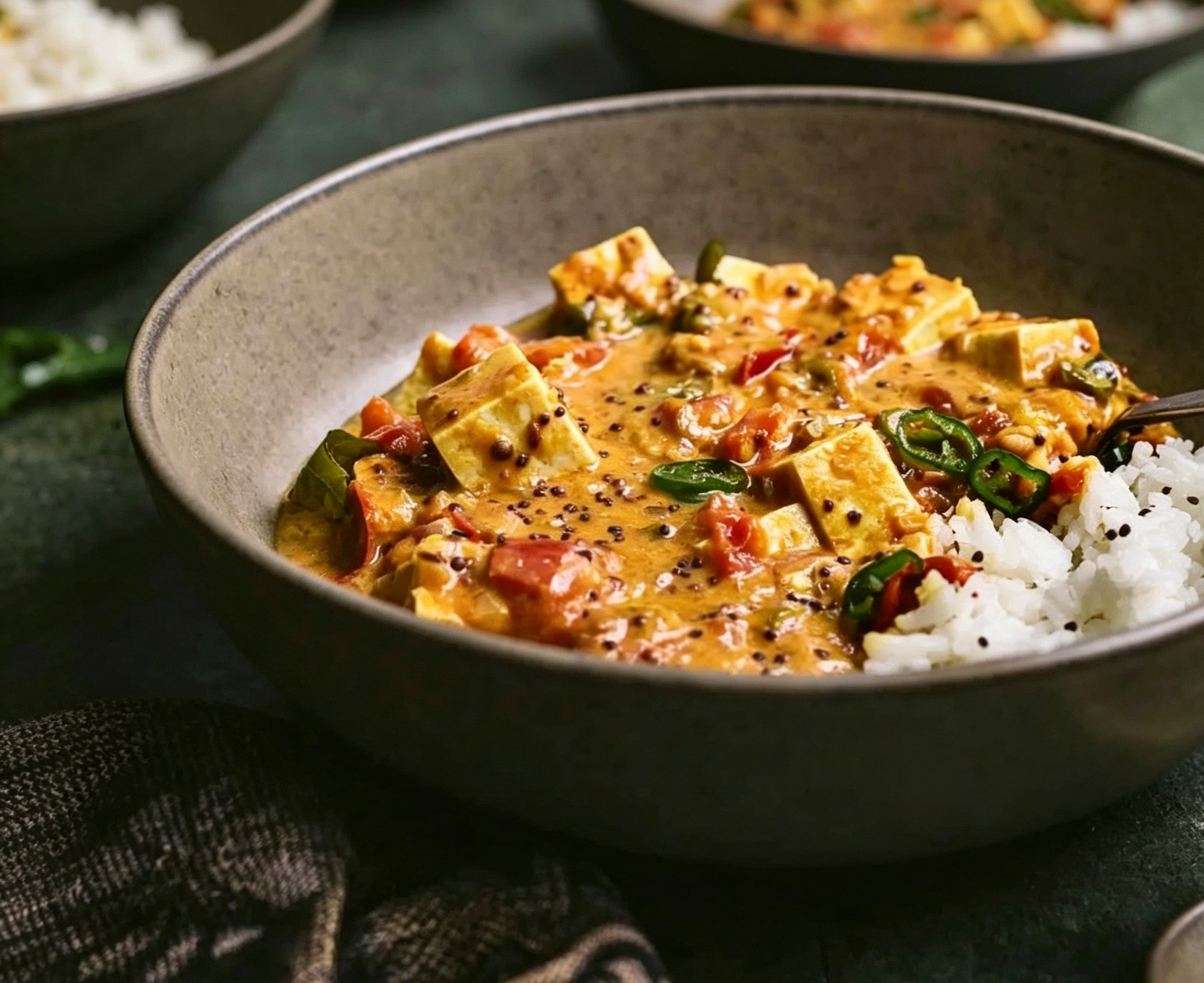
Its products—firm, fresh, and versatile—quickly became staples for stir-fries, soups, hot pots, braised dishes, and cold appetizers. For many overseas Chinese families, the tofu offered something beyond nutrition: a familiar taste that made home feel just a little closer.
Before long, Lin’s nickname spread naturally throughout Colombo’s Chinese community.
She had become “Tofu Beauty.”
More Than a Business
As production expanded, Lin began training young Sri Lankans in traditional tofu-making techniques.
Some later opened their own food businesses. Others carried their newly acquired skills abroad, finding work in countries including Japan.
What began as a family experiment gradually evolved into a quiet form of cultural exchange—one where craftsmanship crossed borders through everyday food rather than formal institutions.
For Lin, watching others build better futures from skills learned in her workshop became one of the most rewarding parts of the journey.
(Photo: Lin Suzhen first arrived in Sri Lanka in 2015, still new to everything back then)
Holding On Through the Pandemic
Then came COVID-19.
Many expatriates left Sri Lanka, and demand dropped sharply. Imported soybeans became harder and more expensive to source as global logistics slowed.
Operating costs remained constant while orders declined. Like many business owners, Lin faced a difficult decision: leave or stay. She chose to stay.
During one phone call, her young son asked about the business back in Sri Lanka. When she explained that she was still making tofu despite the difficult circumstances, he innocently asked,
“Can that really count as a business?”
The question stayed with her.
What kept Douzhi Fang alive during those years wasn’t rapid growth or large profits. It was the belief that as long as there was a community looking for authentic Chinese food, there would always be value in making it well.
Growing Beyond the Workshop
As Sri Lanka gradually reopened and international residents returned, demand recovered.
Today, Douzhi Fang employs a team of local staff and operates from a modern production facility near Colombo’s international airport. Standardized production lines have replaced much of the workshop’s original handcrafted process, while improved packaging and branding have helped position the company for broader retail distribution.
The product range has also expanded beyond traditional tofu to include fried tofu, tofu skin, and other soy-based specialties commonly found in Chinese kitchens.
Increasingly, Douzhi Fang is reaching customers beyond the Chinese community.
Its products are now available in selected mainstream Sri Lankan supermarkets, introducing local consumers to ingredients that were once found almost exclusively in Chinese households.
From Ingredients to the Dining Table
With the supply side firmly established, Lin naturally looked toward the next chapter.
Rather than simply selling ingredients, why not showcase what they could become? That idea led to the opening of Golden Crab House.
The restaurant extends Douzhi Fang’s philosophy: quality ingredients prepared with care.
Its signature attraction is premium live crab, selected for freshness and generous size, alongside classic Chinese seafood dishes that emphasize the natural flavors of the ingredients rather than heavy seasoning.
One standout dish pairs fresh local fish with Douzhi Fang’s handmade tofu—a combination that perfectly reflects Lin’s belief that excellent ingredients should always take center stage.
The kitchen is led by an experienced Chinese chef whose cooking favors balance, restraint, and precision, allowing each ingredient to speak for itself.
Hospitality Beyond the Menu
For Lin, running a restaurant isn’t solely about serving meals.
It’s also about creating a place where friendships are maintained and communities stay connected.
Occasionally, she brings back seasonal delicacies from China to share with longtime customers and friends—not as menu items, but as thoughtful gestures.
It’s a small tradition that reflects the spirit behind everything she has built.
A Different Kind of Entrepreneurial Story
Over the past decade, Lin Suzhen has continually reinvented herself—from supermarket operator to tofu maker, manufacturer, employer, mentor, and restaurateur.
Her journey stands apart not because it pursued the biggest market, but because it focused on one that was quietly overlooked.
While many overseas entrepreneurs naturally gravitate toward large-scale trading or construction, Lin chose something far more modest: tofu.
Yet it was precisely this everyday ingredient that allowed her to build a trusted local brand, create employment opportunities, preserve culinary traditions, and foster a sense of belonging for people living far from home.
Sometimes, the most meaningful entrepreneurial stories are not built around revolutionary ideas. Sometimes, they begin with a single block of fresh tofu.